
Guaranteed maximum price (GMP) contracting in Utah
A guaranteed maximum price caps what you can be asked to pay: actual costs plus a stated fee, up to a written ceiling, with overruns beyond it carried by the builder. Grandview sets and holds GMPs under a Utah B100 general contractor license for owners who need a bankable number before the drawings are fully finished.
When a GMP is the right contract — and when it isn’t
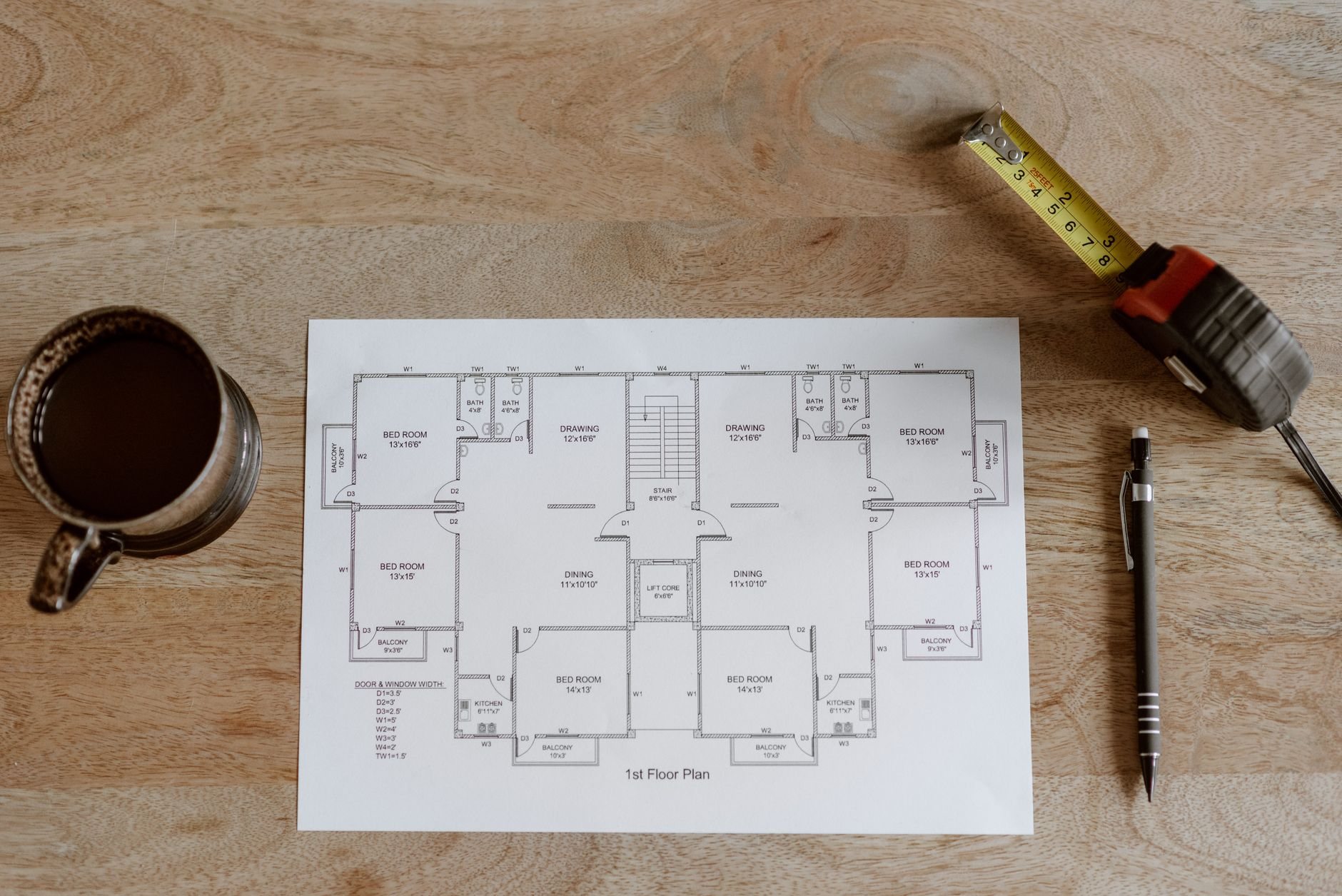
A GMP earns its keep when you need cost certainty before design is 100% complete. Construction lenders on commercial and multifamily deals routinely require a guaranteed number before closing, and a GMP produces one at 75–90% documents instead of waiting months for a finished set and a hard bid. It’s the pricing mechanism at the center of open-book CM-at-risk, which is how we usually deliver it.
It’s the wrong tool in two directions. If your drawings are complete and scope is stable, a lump-sum bid is simpler — see construction management for how we sort delivery models honestly. If what you value most is paying exactly what the work costs, with the cap as a backstop rather than a target, that’s cost-plus with a GMP cap. And owners who want to hold the trade contracts themselves, with us on a management fee, are looking at CM-as-agent — where no guarantee exists at all.
What actually goes into the guaranteed number
A GMP is not one number. It’s a stack of them, and reading the stack is how you judge whether a guarantee is real:
- Cost of the work — trade pricing built from real bids and quantity takeoffs against the current drawing set, not square-foot guesses.
- General conditions — supervision, temporary facilities, and duration priced explicitly. Duration matters in Utah: plan review in fast-growth Lehi, Saratoga Springs, and Eagle Mountain runs longer queues than established Provo or Salt Lake City, and a GMP built on the wrong permitting timeline is underwater before mobilization.
- Contractor’s contingency — a stated percentage for estimating gaps and buyout risk. Ours is a line item you can see, drawn against with documentation, not a cushion hidden in trade numbers.
- Allowances — placeholder values for unselected finishes, each with its assumption stated.
- Fee — fixed or percentage, stated separately, so savings in the cost of the work don’t inflate what we earn.
- Qualifications and assumptions exhibit — the drawing list, code edition, soils assumptions, and everything else the number relies on. This is the guarantee’s fine print; we write it to be read.
Two Utah-specific entries in that exhibit deserve attention. Soils: much of the Wasatch Front sits on expansive clay or collapsible bench soils, so the GMP names the geotechnical report it relies on — conditions beyond that report are a change, and the exhibit says so in advance. Code edition: Utah adopted updated I-codes effective July 2026, and a GMP priced to the old edition is a change-order machine. Ours cite the current Utah-adopted code explicitly.
How the GMP holds up during construction
The guarantee is only as good as the bookkeeping behind it. Every month you see actual costs against the GMP line by line: trade invoices, contingency draws with the reason for each, allowance reconciliations, and buyout results as packages are awarded. If final cost lands under the ceiling, the savings are shared or returned per the contract — a split written before construction starts, not negotiated after.
The GMP moves only for real changes: owner-directed scope, concealed conditions outside the stated assumptions, or code interpretations no document review could have anticipated. Estimating misses are our problem — that is what guaranteed means, and it’s why the contingency exists. We also schedule inside the guarantee realistically: concrete and exterior scopes get planned around the Wasatch Front’s 100-plus annual freeze-thaw days, because a GMP that ignores the calendar just spends its contingency on tarps and heaters.
What does a GMP add to the price in Utah?
Expect the contingency to be the visible difference: roughly 3–5% of the cost of the work when the GMP is set at 90% documents, and 5–10% when it’s set earlier, on top of a fee in the range typical for planning and project management engagements. Treat those as ballpark planning numbers, not a promise. A GMP looks pricier than a hard bid on paper because the risk pricing is visible instead of buried — and unused contingency comes back to you, which no lump sum offers.
What pushes the number up: setting the guarantee too early, incomplete geotechnical information, long permitting queues, and heavy allowance counts. What pulls it down: a stable drawing set, decisive selections, and a solid preconstruction and estimating phase before conversion. Our license (Utah DOPL B100 #14282236-5501) is verifiable at dopl.utah.gov — worth checking when the whole contract rests on the builder standing behind a number.
Questions we actually get
When in design should the GMP be set?
Usually between 75% and 90% construction documents. Earlier than that, the contingency has to cover so much unknown scope that the guarantee costs more than it protects; later, you’ve lost the financing-timeline advantage over a hard bid. We’ll tell you if your set isn’t ready to guarantee — a padded number helps nobody.
What happens if the project finishes under the GMP?
The savings are shared or returned according to a split written into the contract before construction begins — commonly 100% to the owner or a stated percentage split. Because the books are open, you watch the variance develop month by month rather than discovering it at closeout.
Can the GMP ever go up?
Only through a signed change order for owner-directed scope changes, concealed conditions outside the stated geotechnical and existing-conditions assumptions, or code requirements no reasonable document review could have caught. Estimating errors and buyout misses stay on our side of the line. The qualifications exhibit defines that boundary before you sign.
Do lenders accept a GMP in place of a fixed bid?
Generally, yes — construction lenders on commercial and multifamily projects treat an executed GMP from a licensed general contractor as the cost basis for the loan. Confirm requirements early; some lenders want the GMP amendment signed before closing, which drives when design must reach conversion readiness.
Tell us what you’re working on
We reply within a couple of hours during business hours — a day at most. You’ll get a straight read on whether your project is ready for a guaranteed number.